
Water Workout: Swimming can provide low-impact and full-body exercise for all ages and abilities
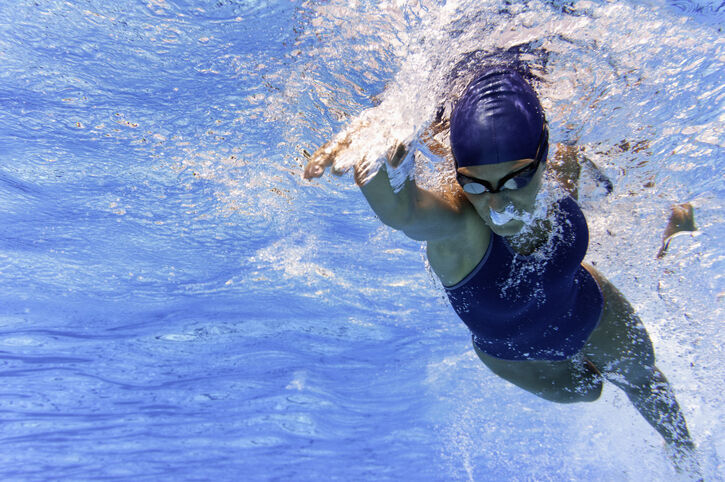
There are many exercises that specifically strengthen different parts of the body. But swimming, in addition to being fun and relaxing, can provide an intense workout that helps strengthen every part of the body.
Although swimming is a workout that uses the entire body to propel a swimmer through the water, it’s also an ideal workout for anyone who wants to focus on the arms and upper body, as those are most heavily used.
“[Swimming] is an upper body primary activity,” says Alexander Hutchison, a fitness and wellness expert and the author of “The Swim Prescription.” “It’s going to be arms, mostly. Even with your best swimmer in the world, the amount of propulsion they get from the legs is going to be 30, maybe 40% if they’re just incredibly good at kicking. For your average swimmer, 90% of the activity is going to be done by the arms.”
Hutchison notes there is often a learning curve when people transition into swimming from other exercises because of how much work is done by the arms.
“There’s certain limitations that come with swimming when you have people coming from a non-swimming background,” Hutchison says. “Especially when they’re coming from running or cycling to swimming, because you just don’t use your arms in those activities. It’s a different kind of fitness when you hop in the pool to swim.”
That doesn’t mean that swimmers don’t use their legs at all. Although swimmers primarily use their arms to move through the water, swimming is an optimal exercise for anyone looking to gain strength throughout their whole body because they also use their legs and core.
“If you don’t do anything with your legs, they quite literally sink and dangle behind you,” Hutchison says. “Your core, back and abdominal muscles are still active in making sure that you’re staying in a prone position, as opposed to letting your legs drag behind you.
According to Hutchison, it’s difficult to say how many calories swimming burns per hour, because each swimmer has a different body and swims at different intensities.
“It’s going to be dependent on the activity of that particular person, how hard they’re actually working,” Hutchison explains.
Hutchison added that one way to ensure extra calories are burned is to swim in relatively cool water, anything “well under” 80 degrees, because the body will use energy in the workout and while trying to keep warm.
“When you stick yourself in the water, it’s going to suck away more heat from your body than if you were to sit in the air,” Hutchison says. “You have this huge amount of heat transduction that takes place and if it’s relatively cool water, then the body is going to be interested in keeping itself warm in addition to doing the exercise, so you’ll burn additional calories just on the fact that you’re sitting there in some cool water.”
Unlike other exercises, like running or cycling, that can be hard on your joints, swimming is a low-impact workout.
“The water is applying a pressure that’s an upward force to keep you afloat,” Hutchison says. “When you’re standing in chest-deep water, you’re unloading about 70 percent of your body weight, and you’re not utilizing any muscles to keep that body weight standing. It effectively cradles you.”
Hutchison explains that the pressure helps to decompress the body’s joints under water. As swimming is easier on the joints than other exercises, swimmers can have a more intense workout for a longer period of time, which can result in weight loss for swimmers, or just being able to maintain a more intense workout for extended periods, according to Hutchison.
Although swimming can be an intense workout, it’s also one that’s good for all age ranges and abilities, says Hutchison.
“You’re simply not going to get muscle aches and pains if you hop into a pool and do some swimming.”