The best kind of of tan is no tan at all

Whether you are indoors or outside, experts say tanning is not beneficial to your skin. According to the Centers for Disease Control and Prevention, tanning is the body’s response to injury from ultraviolet rays. Repeated exposure to the sun can then lead to melanoma, one of the deadliest forms of cancer. “We are seeing a tremendous rise in melanoma,” says Dr. Suzan Obagi, director of the University of Pittsburgh Medical Center’s Cosmetic Surgery and Skin Health Center. “It is one of the leading causes of death in younger people.”
Obagi says the highest predictor of melanoma is sunburn. “The more sunburn, the higher the risk,” she says. “Blistering from sunburn doubles the chances of melanoma.”
While there is no cure for melanoma, Obagi says if diagnosed in its earliest stage in the epidermis (top layer of skin), it can be removed. If it penetrates beyond the epidermis, it can spread to nerves and blood vessels throughout the body. At that point chemotherapy is the only treatment available, which Obagi says only slows down the cancer, and is effective in only about 5% of cases.
To reduce the risk of sunburn, Obagi recommends using a sunscreen whenever you go outdoors, whether it’s for running, swimming, water skiing, hiking, gardening, biking, or exercising. The best sunscreens you can buy at pharmacy are zinc oxide and titanium oxide. They help reflect the sun, she says. Other commercially available sunscreens contain certain chemicals like avobenzone, parsol 1789, helioplex and mexoryl. “These are listed on the labels,” Obagi says. “They absorb the sun’s rays, but cause more damage to the skin.”
She says to buy a sunscreen with an SPF of 50 or higher, to maximize protection, especially for young children. “We are finding changes in skin levels due to melanoma in children as young as 5 to 10 years old,” Obagi says, of the need for protection at an early age.
However, the skin needs sun to produce vitamin D, underscoring the need for protection from the hazards of UV rays. Obagi says the skin makes less vitamin D after more than 15 minutes in the sun. “You can get enough vitamin D from diet and dietary supplements,” she says.
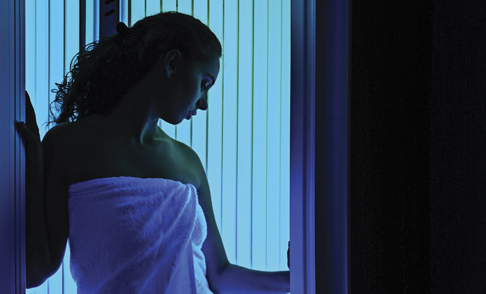
While melanoma can happen anywhere in the body, tanning beds have increased that possibility. “They are the bane of a dermatologist’s existence,” Obagi says. “There is no such thing as a safe tanning bed.” She says using a tanning bed exposes a person to high doses of UV in a short period of time. “Younger people tanning like this are more predisposed to a life-threatening illness,” she says. “It also accelerates wrinkling of the skin due to the breakdown of collagen in the dermis, and inhibits the formation of new collagen.”
People should also keep a close eye on moles. Normally, they are oval or round in shape, tan, black, or brown in color, and are smaller than a quarter-inch in diameter. When they change color, size or shape it is time for a skin cancer screening. Obagi recommends an annual screening, or when moles change or new ones occur. “If you have a strong family history of melanoma, people should have screenings done in their early 20s,” she says.
She doesn’t say don’t go outside in the sun, but go out protected with: sunscreen; a wide brimmed hat; sun glasses; cover-ups; and avoid the peak hours of the sun, 10 a.m. to 4 p.m.
However, when she diagnoses melanoma in a 10-year-old, she says it’s proof that “we have to be better about this.”