
The basics of pet blood donation
How a 15-minute blood draw can let your pet save a life
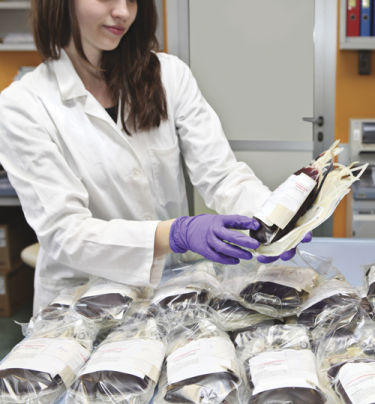
Yukon and Caddie are lifesavers. Jenn Orze’s dogs, a husky-mixed breed and a German shepherd-mixed breed, have helped save many lives over the last two years. No, they didn’t rescue anyone stuck in a well. These two dogs donate their blood to other animals.
“Working in veterinary medicine, I see what a huge need it is,” says Orze, practice manager at Metropolitan Veterinary Center in Chicago. “It can be difficult to find blood, so it’s great that we have local resources.”
Owners don’t often realize the value of pet blood donations, she says.
“People just don’t think about it. Why would you think about it?” Orze says.
But donor blood is crucial in emergency pet care, because veterinarians need to be ready for worst-case scenarios.
“We need to have it on hand because an emergency can happen any time,” says Dr. Kjerstin Jacobs, a veterinarian at the center. “There’s just no way to know. But when we need it, we really need it. Blood donations save lives. We see it all the time.”
Pet blood is most often used in traumas, Jacobs says, for animals with bleeding tumors, and when a pet gets hit by a car.
Good candidates for blood donation are typically between ages 1 and 8, Jacobs says. They should weigh more than 55 pounds, be free of blood-borne illnesses, and be in excellent overall health. Candidate animals will have their blood tested and typed, and also get assessed on their personality.
“Donors have to have calm personalities, and they have to be well behaved,” Jacobs says. “We can’t fight a dog to get blood. We have to have a dog that is cooperative.”
Pets can donate every three to four months, she says. They draw about 450 milliliters of blood from a large dog during one session, which takes about 15 minutes.
“It’s no different than humans, except you get a biscuit and you’re good to go,” Jacobs says. “Pets replace blood within five days.”
At the Metropolitan Veterinary Center, which operates extended hours and provides urgent care, donated blood is only used on-site for its own patients. But commercial blood banks are out there.
“It’s more difficult (to maintain our own donation center), but we’re able to have fresh whole blood instead of a preserved product,” Jacobs says.
The center has a dozen regular donors, including Orze’s pets. Orze says her 4-year-old dogs and occasionally her 7-year-old cat, Carmen, have donated blood without any problems.
“I think dogs and cats are tougher than us. My dogs have been fine with it,” she says. “They get a lot of attention and a lot of treats afterward. All they know is that they get yummy stuff when they’re done.”
And Orze says she likes knowing she and her pets can help other animals.
“When you find out your dog’s blood helped save another’s, people really love that,” she says.