
Stay Fit to Function
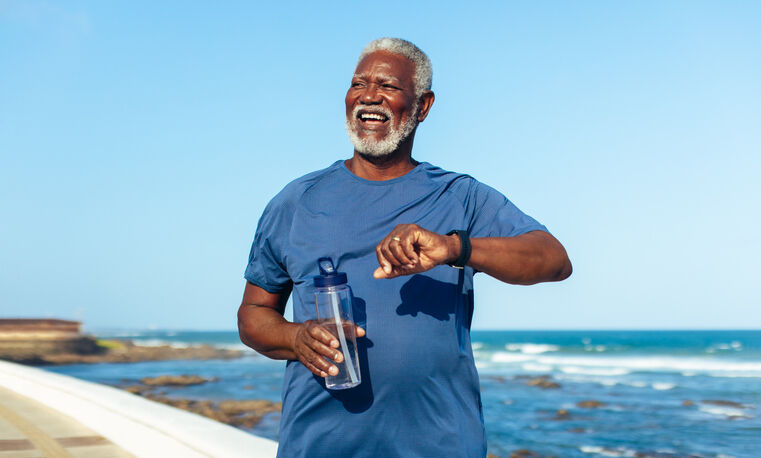
Being physically active and striving for better health and a stronger body is always a good thing, but functional fitness training aims specifically to improve one’s ability to more efficiently and effectively perform common daily activities — now and into the future.
The intended payoff of functional fitness training is a safer and better quality of life for the long-term.
The husband-and-wife physical therapist team of Larry and Elizabeth Mattocks provide functional fitness training under the Crossfit brand at their Penn Ohio Rehabilitation center.
“Think of it as ‘training for life,’” Larry says of functional fitness. “It’s multi-generational and everyone from teenagers to people in their 70s stand to benefit from it.”
Unlike conventional training, which typically emphasizes working specific muscle groups, functional fitness simultaneously focuses on multiple muscle groups, mimicking real-life movements such as twisting, turning, bending and squatting. This approach improves body coordination, strength and endurance, and is grounded in four basic movements and motions:
- Squat – The proven test of functional fitness is a person’s ability to lower themself to the floor in a squatting position, then raise up to stand without using assistance from their hands. This movement addresses the range of motion, strength, balance and connective tissue of the hips. “If you can’t do the movement and motion required to squat, you can’t get up out of a chair or off the toilet, which gets more challenging with age,” Larry says.
- Deadlift – Mimics lifting a heavy object from the floor.
- Push-pull motion – Builds upper body strength
- Carrying – Engages legs, core, shoulders and arms working together.
These key connective tissues support the functional fitness movements:
- Tendons - Fibrous cords that connect muscles to bones, transmitting the force generated by muscle contractions to create movement.
- Ligaments - Connect bones to bones and provide stability to joints.
- Fascia – Membranous structures that surrounds muscles, bones, nerves and organs, providing support and structure throughout the body.
- Cartilage - Acts as a cushion between bones in joints, reducing friction and absorbing shock during movement.
Functional fitness overtraining builds “reserve” strength and ability, which is critical when preparing for the frailty and loss of capacity that occur with age.
“If you’re comfortably able to deadlift 20 pounds in training, and you maintain that level through your life, then lifting a 10-pound bag of groceries when you’re 70 will still be easy,” Larry explains.
Functional fitness primarily uses Type I and Type II muscle fibers. Type I generate low force for sustained periods and are essential for endurance activities, while Type II produce high force rapidly but tire quickly. Type II are ideal for short powerful movements.
“Type II fibers help us not to fall, and with age we lose these far faster than Type I fibers,” Larry says. “Fall risk is a real concern with older adults, and the most important benefit of functional fitness is injury prevention.”
A broken hip can lead to death, particularly in older adults, due in part to prolonged immobility.
“We want to keep people out of the nursing home and enjoying long active lives,” said Larry.