
Pets and Love
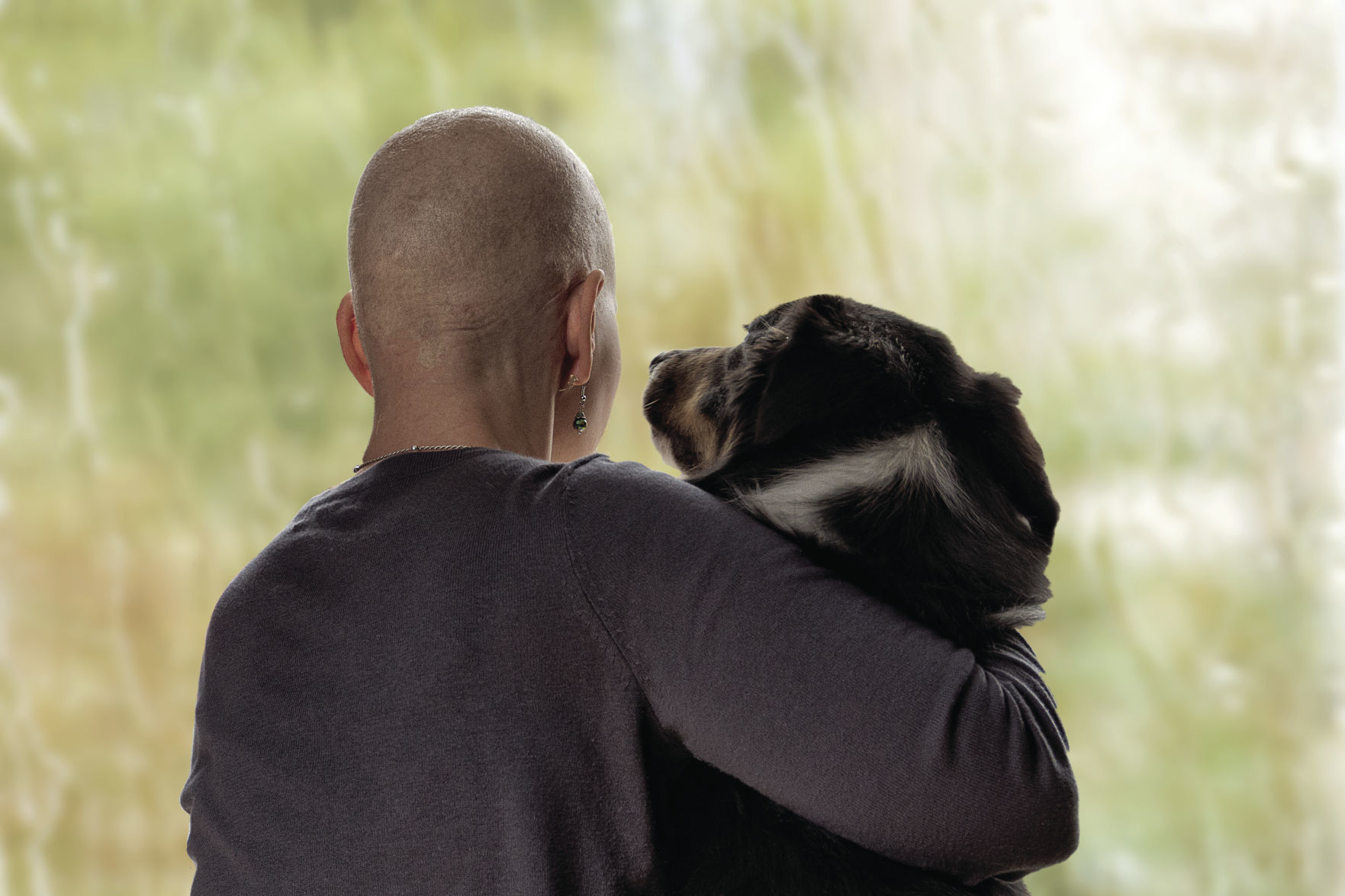
For people who’ve dealt with the loss of a spouse, whether it’s from a death, a divorce or a long-term illness like dementia, the aftermath can be devastating. So much that some studies say it may take years off your life. While leaning on family and friends or getting involved in the community to fend off feelings of depression and loneliness may help, they can’t always take the sadness away of coming home to a suddenly empty house.
Recent research from Florida State University has found proof that another kind of support system may help those in the grieving process, and they’ve often got four legs and fur.
“Pets are known for easing depression in various circumstances, and that is not different for those dealing with the passing of a loved one,” says Pat O’Kane, owner of Always Best Care, an in-home senior care services center in San Antonio. “Life can be lonely as a senior, especially if you have lost your spouse. At this stage of your life, a pet can provide you with the companionship you need.”
New sense of purpose
Funded by the Gerontological Society of America and the WALTHAM Centre for Pet Nutrition and published in The Gerontologist, the study examined depressive symptoms and loneliness among people age 50 and older who experienced the loss of a spouse through death or divorce.
Lead study author and FSU professor Dawn Carr and her team found that people who lost their spouse experienced higher levels of depression. But people without a pet experienced higher depressive symptoms and loneliness than those who had pets. In fact, those who had a pet and experienced the death or divorce of their spouse were no lonelier than older adults who didn’t experience one of those events, the study found.
Owning a pet after a spousal death “gives the elder something to focus on, such as work does for younger people when they have a great loss,” says Dr. Elizabeth Landsverk, founder of ElderConsult, a geriatric medical practice in Burlingame, Calif.
“Divorce is a life-changer, especially for those who have been married for 20 or 30 years. It is a source of affection, distraction, a focus of routine and tasks that take attention, therefore less time to dwell less on the loss. That can relieve the pain for a time,” she adds.
Real health benefits
Dogs and cats are better for helping with depression, anxiety, stress, loneliness and cardiovascular health, O’Kane says. Landsverk adds that having a pet “will also decrease the stress, the cortisol level, and the physical damage that increased stress hormones do over time,” she says.
Landsverk also says horses are great for interpreting moods; rabbits are nice and furry, for those who have more advanced dementia.
“I have seen videos of birds that talk to their owner and engage more like a dialogue,” she says. “I saw a video of a goose who came running to his owner and put out his wings to ‘hug’ a welcome.”
O’Kane says dogs and cats are the most common types of pets owned by seniors, but guinea pigs, rabbits, turtles and birds are also popular choices.
“Many animals can sense when something is wrong and will be by your side when you need them,” he says. “When you have a pet that is always excited to see you and stays by your side, you feel that they are there to listen to you at any time and will give you unconditional love. No matter what animal you choose as a pet, they are likely to draw you out of your shell and increase your interest in life.”