
Male breast cancer is rare, but can be just as deadly as it is for women
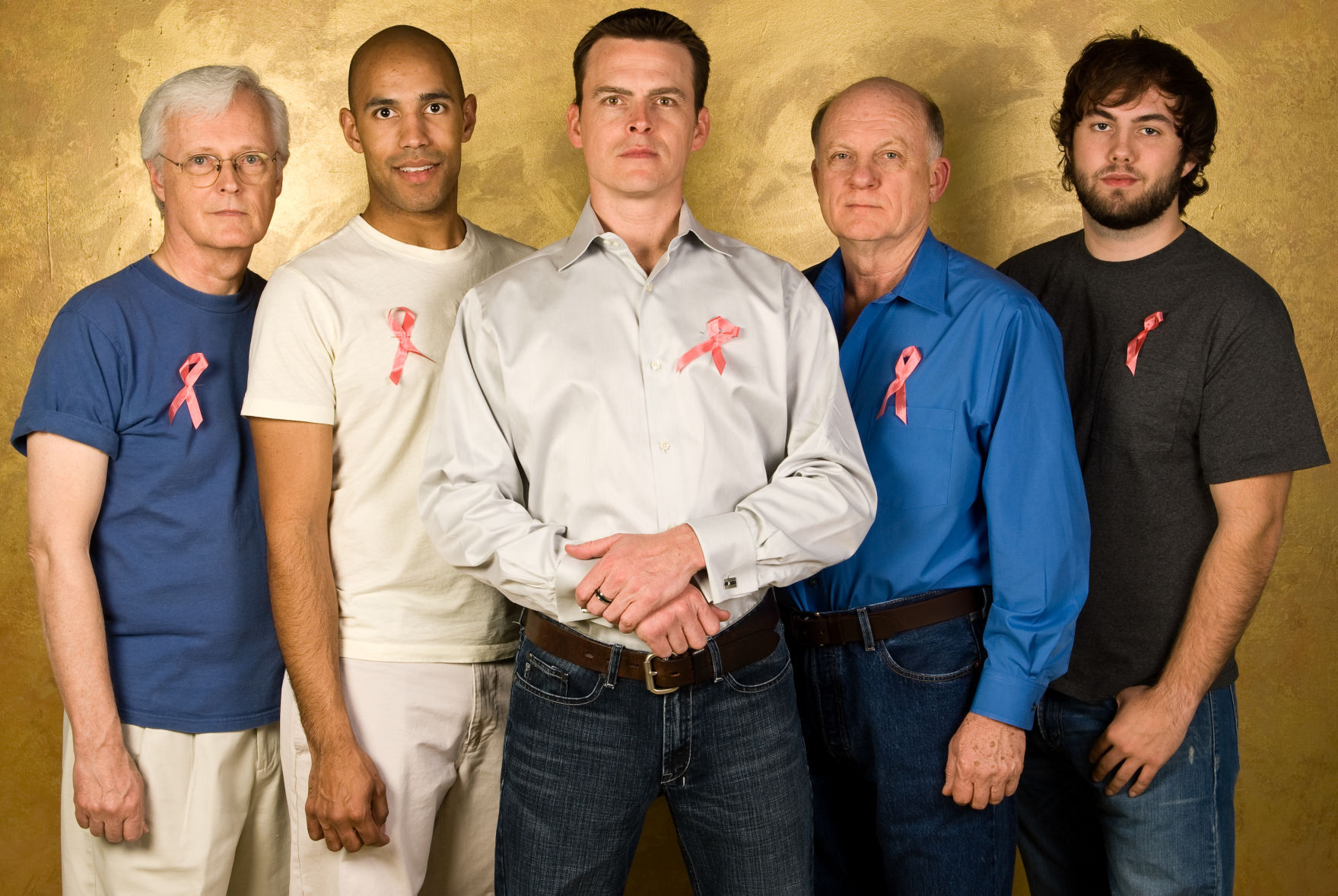
When it comes to male breast cancer, Dr. Emil Fernando has good news and bad news.
The good news, according to Fernando, is that men have a slim chance of developing breast cancer.
“Male breast cancer is rare,” says Fernando, a breast surgical oncologist with the Allegheny Health Network in Pittsburgh, as well as assistant professor of surgery at Drexel University College of Medicine. “It’s not a common disease.”
Based on statistics from the American Cancer Society, Fernando says there are estimated to be 2,650 new cases of male breast cancer in 2021. That compares to 280,500 new cases of invasive breast cancer and another 50,000 instances of pre-cancer expected in women this year.
Statistics show a woman has a 12% chance to be diagnosed with breast cancer, whereas a man has a less than 1% chance.
“It’s certainly way, way more prevalent in women,” Fernando says.
Estimates suggest there will be 500-530 male deaths from breast cancer in 2021. Therein lies the bad news: Possibly because of the disease’s rarity in men, it often goes undetected longer, which can make it more difficult to treat successfully.
“The survival rate for the disease is the same for men as it is for women based on the stage of the disease,” Fernando says. “The problem is, because we don’t do screening with men, oftentimes we find the disease at a later stage in a man than a woman. It’s because the stage is higher that we sometimes see worse survival.”
Th reason men do not experience the disease as frequently as women is biological.
“The fact of the matter is, men, typically, don’t have a large breast gland,” Fernando says. “Every man does have a small amount of breast tissue behind and around the nipple and areola. … That’s why when we do find breast cancers in men, they are typically right around the nipple area, where in women they can be anywhere throughout the breast itself.”
Because sample sizes are so small, Fernando says it is hard to separate risk factors for men. More than anything, doctors see mutations as the reason men develop breast cancer, with the BRCA2 gene mutation “frequently implicated in breast cancer in men,” Fernando says.
Screenings are not recommended for males because of the disease’s rarity, but men should watch out for retraction of the nipple — when it looks like it is being pulled in or inverted. Changes in skin color, skin becoming red or scaly, as well as discharge or blood from the nipple are also cause for concern. Any of those symptoms should immediately be bought to the attention of a doctor.
“Those are certainly things where we would want to evaluate what is going on there,” Fernando says. “The signs and things to look out for are fairly similar between men and women.
“Because it is so rare, I don’t think every man needs to be checking their chest every month, but if they were to notice a lump — something like a pebble or pea or larger — something behind or around the nipple area, that would be the biggest telltale sign. Or, if they notice the lymph nodes under their armpit are swollen or enlarged.”
Treatment is similar in men and women, Fernando says. The biggest difference is that men typically have less breast tissue, so surgery often requires removal of the nipple, as the tumor is often found right around that area. The surgery is technically a mastectomy, or a removal of the breast, Fernando says. But there is a growing movement in the field to try a lumpectomy, which just removes the tumor and limited tissue around it, if the conditions are right.
Fernando also advocates for men to be offered reconstructive surgery when the nipple is removed and/or implants to make both sides of the chest appear equal. Such procedures are typically covered by insurance because it is seen as part of cancer treatment rather than cosmetic, he adds.
Surgery is followed by radiation treatment. As is the case with women, men need to have their lymph nodes checked to see if the disease has spread, Fernando says. Chemotherapy might be used in some instances. Despite men not typically producing a lot of estrogen or progesterone, hormone blockers are still used — sometimes for a couple of years — to keep the body from feeding the cancer.