
How social media is changing the way we choose our food
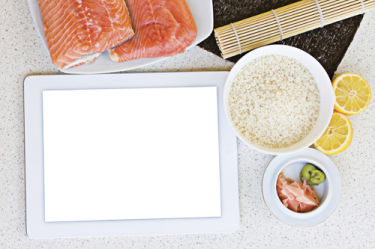
It’s 5:30 at night. Your nearly empty fridge contains a chicken breast, some sweet potatoes and a leek. Do you crack open a cookbook in your cabinet? Or grab the Yellow Pages and order takeout?
No, most likely you check your Pinterest boards to find something that looks good, order delivery on GrubHub, or ask your Facebook friends for recipe recommendations.
Like many aspects of our lives, social media has changed the way we make decisions about dinners, snacks and almost everything edible.
Decision du juor
“I tend to never look at my cookbooks anymore,” says Jacky Hackett, a technology consultant from Oak Park, Ill., who uses social media to find inspiration for many meals.
She scans Pinterest blogs for dinner ideas, follows restaurants on Facebook, and relies on social media sites for word-of-mouth recommendations.
“I definitely have tried a ton of things on those sites that I wouldn’t have tried otherwise,” Hackett says.
She also places more weight on recommendations she sees via Instagram or Facebook vs. seeking out a location on Yelp.
Jon Stemmle is director of the Health Communication Research Center at the Missouri School of Journalism. He says restaurants and other food-related businesses are catching on to how to use social media to tell their story and engage customers. Stemmle calls it the “Food Networkization” of social media.
“It’s not just the cooking of the food; it’s the story of the food, and social media is helping tell that,” he says. At the same time, it takes customers to help spread the word.
“Research shows advertisers are not trusted on social media. It’s all about your peers,” Stemmle says.
A Zocalo Group study from August 2013 noted that while “direct, in-person recommendations” are still the most trusted source of recommendations, thumbs-ups on a You Tube review and Facebook posts both ranked higher than Yelp.
Hungry eyes
Social media connects us over a shared love for food, but some researchers think the overexposure to “food porn” is desensitizing us. A recent study published in the Journal of Consumer Psychology suggests viewing repeated images of some foods can give you less enjoyment than the real thing.
In the study, 232 people rated photos of foods. Half the group viewed salty foods, such as french fries and chips, and the other half viewed sweet foods.
Afterward, everyone ate salty peanuts.
The people who saw the pictures of salty foods enjoyed the peanuts less, though they hadn’t seen photos of peanuts.
The study’s co-authors say the images made the viewers feel as if they’d sated their desire for salty foods without a grain of salt ever touching their tongue. One described this effect as “sensory boredom,” an unconscious desire to move on to a new taste.
These early findings might give us a clue to how food on social media affects us. But don’t count on it becoming a quick diet trick. In this case, the viewing and eating experiences happened in a vacuum.
“I don’t think any of us sees that much of the exact same thing,” Stemmle says. “I think the study is completely valid, but it’s not real-world applicable.”