
Help kids with autism overcome food dislikes and anxieties
Think outside the plate
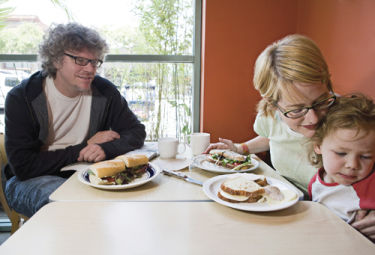
A family dinner—whether it’s around the kitchen table or in a restaurant—comes with its own set of challenges, with spilled drinks and spitballs flying across the table. But it can be even tougher to manage when a child has autism, and tends to be an especially selective eater.
Emily Kuschner is a psychologist with Center for Autism Research at Children’s Hospital of Philadelphia. She is currently testing a method she developed to help children with autism ages 8 to 12 to overcome food anxieties and dislikes. Eating is a socially important issue, and these extreme sensitivities can affect how much children enjoy experiences. Think of a child who can’t stand frosting or pizza going to a friend’s birthday party. Or everyone getting excited to order at a restaurant, and a child grossed out by the menu.
“One of the biggest reasons I got into this was that I had a lot of parents saying, ‘I just want to go out to dinner,’” Kuschner says. “It has a huge social and family impact.”
It’s OK to Play with Food
Research shows sensory issues and anxiety about new experiences make it hard for children with autism to enjoy a variety of foods, not to mention maintain a good diet.
“Being picky about food is pretty common in 2- to 5-year-olds,” Kuschner says. “But in kids with autism spectrum disorder, it persists.”
Parents should first talk with their pediatrician to rule out medical issues. A child could be avoiding certain foods because an allergy or intolerance causes cramps every time he eats it.
“The best way to treat anxiety is by exposure,” Kuschner says.
Put the food on the table without asking the child to eat it. Find ways to play with it. Spaghetti sauce and apple- sauce make great finger paints, she says. Ask him to try blending a small amount of a new food with something he already likes. Or make subtle changes, such as switching from Honey Nut Cheerios to Multigrain Cheerios.
Parents seeking support can find books that focus on methods to expand children’s food preferences. Kuschner says pediatricians can also recommend a psychologist or an occupational therapist who specializes in eating-related issues.
Be Balanced and Honest
Beyond the social and emotional benefits, helping a kid with autism overcome food dislikes makes it easier to eat a healthy diet.
“General research shows iron, vitamin D, calcium and fiber are the big nutrients typically missing from diets of kids with autism,” says Shawn Tobin, a pediatric dietitian at Children’s Hospital of Philadelphia.
Tobin helps parents evaluate their children’s diets, and brainstorms to find foods that will be tolerated by kids, to meet their nutritional needs.
When your child isn’t eating, you may be tempted to let him eat whatever and whenever he wants. But Tobin advises parents to keep a “good meal structure” of three meals and two to three snacks per day. Don’t let them eat constantly, he says, because leads to overeating and unhealthy weight gain.
And don’t fool kids by sneaking healthy foods into a favorite snack. It might backfire, Kuschner says, if you blend broccoli into a smoothie and confess afterward.
“We want to help kids (get over their distastes),” she says.
If you tell them they’ve been tricked into eating something, “they’ll never trust you and still probably say they hate it. The more empowerment they feel, the more headway they’ll make,” Kuschner says.