Have a safe and productive commute
Steer clear of road rage, germy gas pumps and backseat clutter
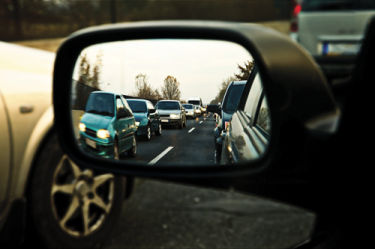
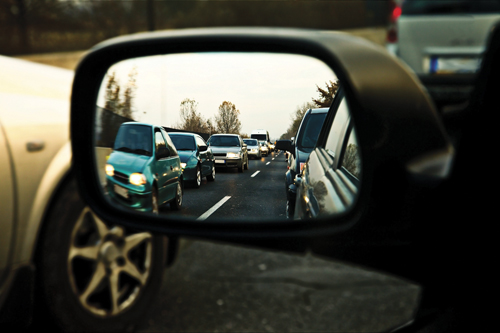
You’re stuck. Again. Traffic is barely inching along, and it feels like you’re moving slower than frozen molasses. A red Honda is so close to your bumper that you can actually see the driver’s nose hairs in your rearview mirror. You turn on the radio to try to forget how irritated you are, but the news is grim and you’re sick of hearing the same old songs. Your back hurts, your legs are achy, and you can’t believe the lady in the car next to you is putting on lipstick while eating a bagel. It’s enough to drive anyone stark raving mad!
You can’t avoid your daily commute to and from work—unless you want to end up jobless. Like it or not, you’re stuck with that mind-numbing passage of time. Five. Days. A. Week.
But you can find easy ways to the make drive back and forth less maddening, and get a firm grip on the road’s mind games. Transform your commute into a healthier experience for your body and mind. You’ll be less stressed, more productive, better organized, and ready to start your day.
Get comfortable
A car ride is no picnic in the park. Stiff necks, achy feet and sore arms top the list of common commuting complaints. And we all need to make adjustments that work for us to have a safe and comfortable commute. So before you begin your journey, make sure your car “fits” you, says Lauren Fix, an automotive expert based in Lancaster, N.Y.
“A car doesn’t get more comfortable with time. It gets less comfortable,” Fix says. “You don’t break one in like a pair of shoes. You need to make sure it’s comfortable for you from the beginning, or think about trading for a new one.”
Once you find a car that makes you comfortable, Fix—known as The Car Coach—says to optimize your body position by adjusting your seat, mirrors and steering wheel to fit your needs. Some cars even offer adjustable gas and brake pedals.
Sit up straight, enough to make sure you can see over the wheel. Establish a starting sitting position by reclining the seat’s backrest about 30 degrees. Put the seat height and cushion in their lowest positions, and then raise the height so you can see the road clearly. If your car is equipped with lumbar support, adjust it to give you enough support. Adjust the mirrors to maximize your view of the road, and to minimize blind spots.
“The goal is for your arms and knees to be slightly bent,” Fix says. “You should be able to reach all the controls.”
To stay safe in a crash, you don’t want to be too close or too far from the steering wheel, so move the seat to be about 12 inches from the center of the airbag to center of your chest. “If you’re closer than that, you risk breaking your sternum,” she says.
In driver’s education class, we learned to keep our hands on the wheel at the “10 and 2” positions at all times. But many driving experts now warn drivers this is no longer the safest position. Research shows this position puts your hands in the path of the airbag, and when it’s released, it could lead to broken fingers, arms and noses, and concussions.
The National Highway Traffic Safety Administration says to hold the steering wheel at the 9 o’clock and 3 o’clock positions instead. Keep your hands relaxed, and keep your wrists straight. Adjust the seat belt to fit comfortably, too. A seat belt should not cut across your waist or neck, Fix says. The lap portion should be across your hips, and the cross-body belt should come over the top of your shoulder.
Drive to be tidy
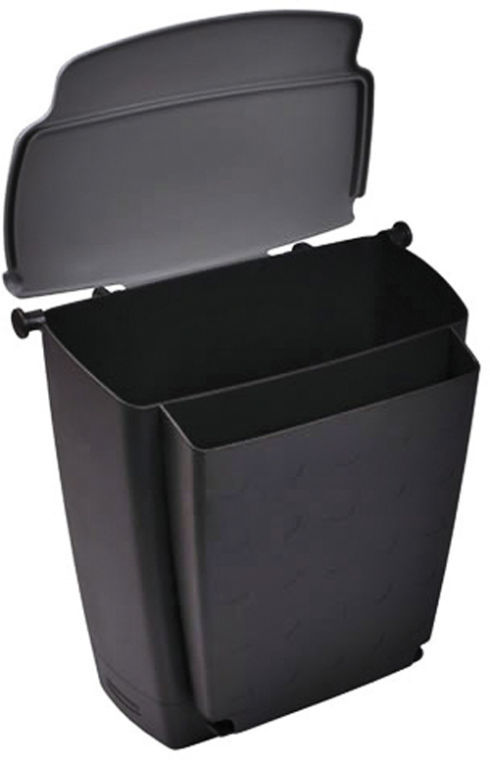
Now that you’ve adjusted your mirrors and seats, it’s time to get organized. Research shows driving in a tidy car—without mounds of old fast food bags on the floor or dirty clothes strewn in the back seat—improves your mood and helps you stay more focused.
“I’ve been in cars that are frightening,” says Colleen Klimczak, a certified professional organizer from Chicago. “They have so much stuff in them that you’re really concerned about what’s under those papers in the back seat.
“We don’t want our cars to be file storages, garbage cans or paper systems. I want to enjoy my time in my car. I don’t want it to smell like french fries.”
But your car is a transport device, so you’re going to be bringing things along.
Klimczak suggests using an errand bag to condense things like dry cleaning, library books and items to return. Put the bag in the car when you leave and—here’s the kicker—take it back out when you get home.
“This is a bag that goes in and out of your house. You empty it, and fill it again,” she says. “You’ll never find old files, cell phone chargers or five different pairs of shoes in my car. All of that lives in my house, not my car.”
Empty the trash daily, and keep clutter to a minimum. It’s more harmful than you think, especially for people who suffer allergies or asthma.
“Clutter collects dust and dampness,” Klimczak says. “Imagine driving around in a little ball of dust everywhere you go. That’s not going to be comfortable.”
Clearing out clutter also helps create a greater sense of calm—something we can all use during our hectic commutes.
“The more stuff we have in our cars, the more awkwardly we hold ourselves,” Klimczak says. “If our car is more peaceful and less cluttered, we’re going to carry ourselves differently. Your shoulders will actually relax. If you have a plan and feel in control, you’ll feel better overall.”
Keep a first aid kit in the trunk for emergencies, and in the winter, stash a blanket and a sturdy pair of boots. Store anti-bacterial wipes—and even a healthy snack that’s easy to grab—in the glove compartment, center console or side door storage pockets.
Filthy fill-ups
Bacteria lurks everywhere we go, and evidence shows some of the worst offenders are the things we touch weekly as part of our commutes.
Kelly Arehart is senior manager for global innovation at Texas-based personal care company Kimberly-Clark Professional. In 2011, she led research for The Healthy Workplace Project, a study in which she and her team examined dirty everyday surfaces, such as gas pumps and ATM machine buttons.
The study found that 71% of gas pump handles, 41% of ATM buttons, and 40% of parking meters and kiosks contained an illness-causing bacteria called adenosine triphosphate.
“From a health perspective, these levels should be concerning to people as they move on with their day after pumping gas. Whatever was on the pump handle can be transferred to your hands, and in turn to the things you touch next—your steering wheel, the door into the office, your desk, even your face,” Arehart says. “We touch our faces about 16 times per hour. So if you haven’t washed your hands after pumping gas, contamination might end up there, as well.”
Keep disinfectant wipes in the glove compartment, or grab a paper towel from the cleaning station and wipe the gas pump before you use it. Or wipe your hands after pumping—or both. The same goes for ATM buttons, Fix says.
And if your hands still feel a little scummy, go the extra mile and wipe the door handles, gear shift and steering wheel.
“Just clean your steering wheel with a paper towel, and you’ll be shocked how much dirt and germs are collected,” Fix says.
Mild to mad in a split second
Even the most mild-mannered among us can find themselves fuming behind the wheel. Road rage largely stems from stress about being late and feelings of confinement, says Steve Albrecht, a San Diego-based expert on violence prevention. He says the driving environment is the perfect cauldron of aggravation.
“Too many cars and not enough space on our roads lead normal people to become raging territorialists and space hogs,” he says.
And people who try to drive kindly may be more likely to get annoyed, since other drivers take advantage.
“Being polite on the roads gives other drivers an opportunity to cut you off, block you in, not let you merge, tailgate, change lanes without signaling, or otherwise use their cars to dominate the small spaces around them,” Albrecht says
Combating road rage takes self-control. Albrecht’s best tip? Just blow it off. Ignore inconsiderate drivers, and don’t give in to temptation to flip them the bird. Also, keep your attention on the road. Anger and distraction can be a deadly combination.
“Pay attention to your safety, and don’t make eye contact with bad or rude drivers, and don’t exchange words or gestures,” he says.
Forget hands-free functions
We know we shouldn’t text and drive, but many people still see no problem with talking on the phone while behind the wheel. They think it’s the same as talking to someone in the car. But that’s just not so, says Tim Lomax, a senior research engineer at the Texas A&M Transportation Institute.
Drivers should avoid all kinds of distraction, Lomax says. While talking to a passenger in the car may be slightly less disruptive, research shows talking on a cell phone is definitely a distraction.
“Maybe it’s because we place greater importance on a phone call, or it takes greater concentration to have a conversation with someone you can’t see,” Lomax says.
Drivers sometimes think voice-to-text functions, speakerphone and wireless headsets are harmless alternatives. But these hands-free tools don’t make you safer.
“The act of holding a phone to your ear is not the problem,” he says. “TTI has done some national studies on this issue of texting and driving and trying to use a voice-to-text system. The thought was maybe not using your hands would make texting less destructive. But that doesn’t appear to be a solution. It’s the engagement of the brain on the task that’s the problem.”
Driving involves serious multitasking, though we treat it as a single action, Lomax says. The only safe choice is not to text or talk on the phone at all while driving. Research shows texting while driving impairs your reaction time as much as the effects of alcohol.
“It’s really tempting, and I’m not going to say that I’ve never done it,” Lomax says. “We all recognize it’s a bad thing, but we haven’t universally recognized just how dangerous it is to text or talk on the phone and drive.
“You just don’t pay attention like you should. When you’re driving a 2- or 3-ton hunk of metal down the road at high speeds, you need to concentrate fully.”