Give Grains a Chance
Explore the benefits of eating the right kinds of grains
It can be easy to feel bad for grains.
For thousands of years — and from corn to quinoa — they’ve been a staple of diets around the world. But more recently, as we’ve collectively packed on the pounds and frantically searched for a quick fix, grains have often become the bad guy. In the minds of some diet gurus and ordinary people attempting to get and stay healthy, dumping grains seems like a magic bullet to lose weight and improve digestion.
A relatively small percentage of people (about 1-2% of the population) have Celiac disease, a diagnosed disorder that prevents the body from properly digesting the gluten found in grains, and a slightly larger group has some gluten intolerance.
But for the rest of us? Don’t give up on grains just yet. Eat them in their best form, and the right amount, and experts say you’ll find they pack a powerful mix of protein, fiber and other nutrients that can help keep you energized and even fight disease.
Heather Mangieri, a Pittsburgh-based registered dietitian and nutritionist, and a spokeswoman for the Academy of Nutrition and Dietetics, says many people who decide to wipe grains from their diet eliminate foods they were probably over-eating: pizza, pasta, breads, crackers.
“It’s not surprising that if you went from eating three slices of pizza for dinner to having a piece of chicken, sweet potato and broccoli, that you will feel better,” she says. “What many people do not realize is that the solution is often as simple as cutting back on grains, not eliminating them.”
The Good, the Bad and the Grainy
If you spend any time in the health food section at the grocery store, it’s hard to miss the boom in gluten-free foods over the last few years.
Kelly Toups, a registered dietitian and program director for the Whole Grains Council, says she chalks up the trend to three major causes: higher rates of obesity and chronic diseases, greater awareness of celiac disease by consumers, and greater awareness of celiac disease by a growing number of food producers who are making more gluten-free products than ever before.
“Now, when other shoppers see gluten-free at the store, they think gluten might be bad,” Toups says.
Plus, some popular diets ditch grains altogether, suggesting that they make people sick because this portion of the food pyramid was not part of the diets of our very distant ancestors — the ones who roamed the planet 8,000 or 9,000 years ago. That’s a key point of the Paleo diet, which has won favor from some celebrities and health enthusiasts.
Anna Ardine Mitchell, clinical nutrition manager at the University of Pittsburgh Medical Center’s Magee-Womens Hospital, says the primary concern about getting sick from grains or the gluten found in their proteins is for people who have celiac disease or a gluten allergy — something that can only be confirmed with medical tests.
But, she says, some truth to the idea exists that the food we’re eating has changed, especially in the last century or so. That’s because the grains that end up on the table are now typically processed into foods that don’t always include all of their nutritional value, along with plenty of bad stuff.
“Most Americans choose to eat their grains in ways that are processed — doughnuts, processed cereal — that have a lot of other ingredients in them,” Mitchell says.
Those types of processed foods include grains that have been refined, which means they’ve been stripped of some of their nutrients. On the other hand, whole grains retain all three parts of the grain: the bran, the germ and the endosperm, which work together to provide the most health benefits, Mangieri says.
“Including whole grains as part of your diet has been shown to be protective against heart disease and may reduce your risk of cancer and diabetes,” she says. “Whole grains contain a variety of nutrients, including complex carbohydrates, phytonutrients, antioxidants, fiber, vitamins and minerals.
The Whole Picture
With all the different labels stamped on food — whole grain! multigrain! all-natural! — it can be tough to figure out exactly what you’re dealing with.
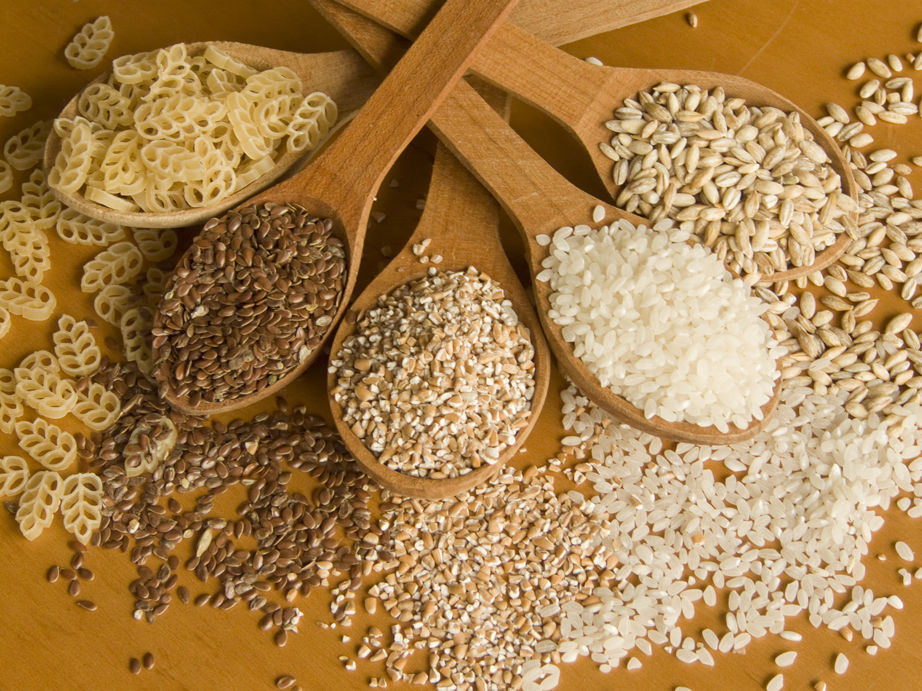
The category of grains encompasses all the edible seeds of cereal plants, but not oil seeds or legumes, or flax or chia seeds. Among those that make the cut: whole grains of wheat, corn, amaranth, barley, kamut, millet, oats, spelt, wild rice, buckwheat, quinoa, bulgur and farro.
Wheat and rice contribute to 19% of the calories in our food supply and corn another 5%, Toups says. A recent survey by the Whole Grains Council found the grains people were most familiar with were whole wheat, oats, brown rice and corn.
Each provides its own unique mix of nutrients, but the key is to consume the whole grains rather than their refined versions, Toups says. That means making a salad with whole-grain quinoa or rice will provide a far bigger nutrition boost than noshing on crackers, cereal or refined pasta and why whole-grain bread is always a better option than is white bread. The refined version of the grain strips the outer bran and the germ, leaving just the starch and not much else. But grab a serving of whole grains, and you can get more goodness.

All in Moderation
Once you know what grains to put on your grocery list, nutritionists say it's important to remember the key is the same with all foods: Keep your portion sizes in check.
Clinical nutrition manager Mitchell says the size of just about every grain product has increased over the years, from bagels to hamburger buns to the cookies we buy in coffee shops. Picking up a bagel and cream cheese at Panera Bread, she says, can be the equivalent of eating four slices of bread.
“It’s just being smart about when I do get it, am I going to eat a portion that would be like eating four slices of bread with butter?” Mitchell says.
Mangieri says it’s crucial to know just how much food adds up to a single serving of grains. She says people often eat a cup and a half or two cups of cereal for breakfast, not realizing that they’ve now already had three or four servings of grains. She suggests balancing a smaller portion — say, a breakfast with a cup and a half of cereal — with other types of foods, such as an egg and berries.
“Look for ways to replace grains with other products, such as using cauliflower as a pizza crust, or butter lettuce in place of a traditional hamburger bun,” she says.
One major tip she shares with her clients: Pasta should always be a side dish, not an entrée.
“If you practice portion control, most foods can fit,” she says.