
Get a Clean Slate
Sorting out what’s fresh in your refrigerator is easy: Just check expiration dates or take a whiff from that milk carton. But your makeup bag? That’s a different story.
Many of us use or store tubes of mascara and lipstick and compacts of blush and foundation for months—even years—before we consider tossing them out. It’s often tough to tell when it’s time to replace something.
While keeping cosmetics fresh isn’t an exact science, with risks of using old stuff ranging from rashes to infections, it’s an important one.
“All makeup has to be tossed after a certain amount of time,” says Dr. Debra Jaliman, a board-certified dermatologist and assistant professor of dermatology at Mount Sinai School of Medicine in New York City. “It is just a question as to how much time for each product.”
Expert opinions vary on how long you should keep makeup in rotation.
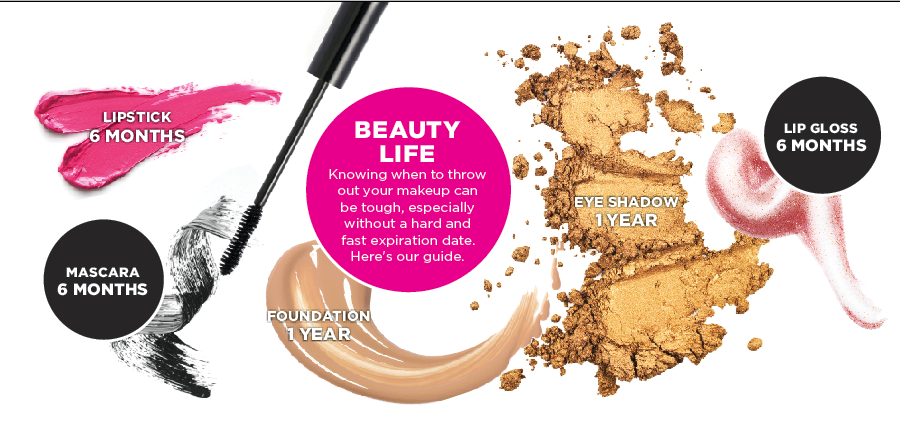
Jaliman suggests keeping mascara and eyeliner for no more than six months after opening, while other experts suggest an even shorter life span. Janet Thomas, president of the Pennsylvania Barber and Cosmetology Association and owner of Janet’s Total Appearance in Shickshinny, Pa., says mascara should be kept for only two to three months.
What’s the big deal?
According to Jaliman, using old makeup can potentially result in two problems. First, old products can decompose, causing the chemicals to separate and have unintended effects on your skin. She’s seen patients who have suffered burns and irritation from makeup that should have been trashed.
Meanwhile, everything in your makeup bag, from lip gloss to mascara wands, offers a welcome place for bacteria to grow. Put it on your skin, and you could end up with an unwanted infection.
“Even worse, they can have viruses and cause a herpes outbreak,” Jaliman says.
Say no to sharing
Another big no-no: sharing your lipstick or eye shadow with a friend. If they happen to have pink eye or another eye infection, you’ll likely end up with it, too. And viruses, like the herpes virus, are often invisible, so you might not know your friend has it—until you get it.
On rare occasions, the situation can be even more serious. Last year, an Australian woman became partially paralyzed after getting a staph infection from a borrowed makeup brush.
How to keep it clean
Thomas says it’s important to make sure your hands are clean before applying any makeup. Using disposable sponges can help prevent the spread of bacteria, as can being diligent about cleaning both your tools and your makeup. Jaliman suggests using baby shampoo to clean brushes and sponges once a week.
Many types of makeup, including lipsticks, can be sprayed with alcohol. And eye pencils should be sharpened with each use.
“It’s taking off a layer of bacteria and giving you a clean slate,” Thomas says.