
Fit by the foot: Podiatrist Christophe Champs explains the role footwear plays in wellness
Roughly one-quarter of the human body’s total bone count is in the feet. Which is why Christophe Champs keeps coming back to the skeleton when talking about how footwear plays a role in overall wellness. The feet are, in essence, the foundation upon which the rest of the body rests. “When the feet flatten or arches collapse, the knee and ankle can go out of alignment, inward or outward, depending on the patient,” says Champs, a podiatrist, biomechanics expert, and founder of the
. “Then, between your knee and your hip, there is only one bone. If the knee goes in, for example, the hip goes or pops out. This can be a source of pelvic tilt or hyperlordosis, which, in certain cases, can lead to back and neck pain. “It all starts from having a poor foundation: your feet and your shoes.” So, when Champs meets with patients, he always reminds them of three things. To start: Shoes and laces — or, in some cases, Velcro — are a basic level of protection and support for the whole body, not just the feet. “The first and most important thing to check is that you are not able to take your shoes off without unlacing them,” Champs says. “Shoes too big, loose or unlaced are a source of ankle sprains.” But people also must spend at least some time barefoot, he says. “Health is about balance,” Champs says. “The foot muscles need to work, which doesn’t happen much in closed shoes. So, make the most of every moment you spend on carpets, grass or sand to let those foot muscles work.” Shoes that don’t provide adequate support are what keep podiatrists like him busy. There is no point in limiting foot movement with footwear that does not provide protection and support in return. “Remember that the lighter the shoes are, the less supportive they are,” Champs says. “Foot comfort is more than cushioning when it comes to picking the right footwear.” Champs says an important distinction to make is between orthotics — which help address asymmetry or improve the performance of the feet — and shoes — which are designed for given activities. Different occasions call for different footwear, from walking at home to walking around the neighborhood, hiking in the woods to playing sports. For instance, Champs recommends laced-up shoes for those working from home at a stand-up desk. “A long-standing position, where you are unsupported and focusing on your work rather than your posture, is a source of problems and pains,” he says. “With a sitting desk, I would recommend you let your feet breathe unshod.” There are different demands on the feet when we walk indoors versus outdoors, he explains. Put simply, humans walk with efficiency. Outdoors, our movements apply 80% of body weight to our feet, he explains. But indoors, the stride gets shorter to adapt to changing environments, and it can be more like putting 120% of body weight on the feet, Champs says. “This is why people should value their foot support even more if they have started to work from home since the pandemic,” he adds. “There are hundreds of tips we can share in clinic about footwear, but recommendations are also fitted to the patient. “For specific advice, consult a professional who has a sound understanding of feet, footwear and the activity you intend to do. It can be a podiatrist or simply a member of your club who doesn’t get injured every week.” When it comes to slippers, Champs says there are no good or bad choices. People want something easy to put on, sometimes warm and always comfy. That is all fine. “What is bad is to wear them too much, as they provide you with no support whatsoever,” Champs says. “I have nothing against being barefoot or wearing slippers, as I do it myself after long working days, but when stepping or walking around, wear laced-up shoes with a supportive sole which has not worn down and isn’t out of shape.” That last part is particularly important, Champs says. Washing shoes may make them look better, but they will not work any better if they have already covered 500 miles, he says. “You can wear old shoes but not worn-down shoes,” Champs emphasizes. Proper footwear also ties into posture. While it alone rarely has a positive impact on posture, it can have a negative impact. “Shoes with soft soles, for example,” Champs says. “Their soles are like sponges, because they are not reinforced with a shank or because they are just made of blown rubber. “Many patients think that soft, cushioned and light shoes will bring them comfort or pain relief. In reality, they let your feet sink into them and, even if your feet are protected from the environment, their movement is still limited by the shoes. “You’re better off not wearing shoes at all than wearing those.” If more or custom support is required, consider insoles or custom orthotics, Champs says. He also cautions people not to trust numbers under the shoe, as fit varies by brand, shoe type, material and stitching. He has a trick to finding the proper fit. “My best advice is to always try your shoes at the end of the day, with the type of socks you’ll mostly wear in them and any custom orthotics, insoles or heel wedge you usually have in,” Champs says. “Shoes that are too big are less supportive, negatively impact your biomechanics, and can lead to a slip, trip or fall. Shoes that are too small are painful, affect your gait, and can damage your skin and nails. “If the shoes don’t feel right in store, it’s because their fit — including their size — doesn’t work for you.”
Roughly one-quarter of the human body’s total bone count is in the feet. Which is why Christophe Champs keeps coming back to the skeleton when talking about how footwear plays a role in overall wellness.
The feet are, in essence, the foundation upon which the rest of the body rests.
“When the feet flatten or arches collapse, the knee and ankle can go out of alignment, inward or outward, depending on the patient,” says Champs, a podiatrist, biomechanics expert, and founder of the PODO clinic and workshop. “Then, between your knee and your hip, there is only one bone. If the knee goes in, for example, the hip goes or pops out. This can be a source of pelvic tilt or hyperlordosis, which, in certain cases, can lead to back and neck pain.
“It all starts from having a poor foundation: your feet and your shoes.”
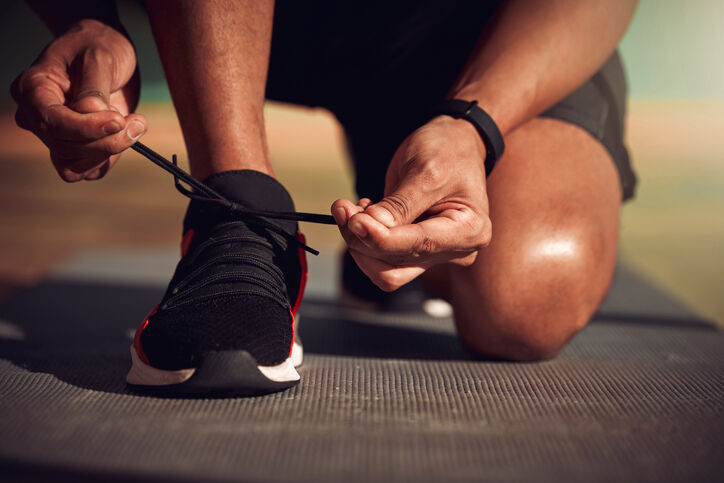
So, when Champs meets with patients, he always reminds them of three things. To start: Shoes and laces — or, in some cases, Velcro — are a basic level of protection and support for the whole body, not just the feet.
“The first and most important thing to check is that you are not able to take your shoes off without unlacing them,” Champs says. “Shoes too big, loose or unlaced are a source of ankle sprains.”
But people also must spend at least some time barefoot, he says.
“Health is about balance,” Champs says. “The foot muscles need to work, which doesn’t happen much in closed shoes. So, make the most of every moment you spend on carpets, grass or sand to let those foot muscles work.”
Shoes that don’t provide adequate support are what keep podiatrists like him busy. There is no point in limiting foot movement with footwear that does not provide protection and support in return.
“Remember that the lighter the shoes are, the less supportive they are,” Champs says. “Foot comfort is more than cushioning when it comes to picking the right footwear.”
Champs says an important distinction to make is between orthotics — which help address asymmetry or improve the performance of the feet — and shoes — which are designed for given activities. Different occasions call for different footwear, from walking at home to walking around the neighborhood, hiking in the woods to playing sports. For instance, Champs recommends laced-up shoes for those working from home at a stand-up desk.
“A long-standing position, where you are unsupported and focusing on your work rather than your posture, is a source of problems and pains,” he says. “With a sitting desk, I would recommend you let your feet breathe unshod.”
There are different demands on the feet when we walk indoors versus outdoors, he explains. Put simply, humans walk with efficiency. Outdoors, our movements apply 80% of body weight to our feet, he explains. But indoors, the stride gets shorter to adapt to changing environments, and it can be more like putting 120% of body weight on the feet, Champs says.
“This is why people should value their foot support even more if they have started to work from home since the pandemic,” he adds. “There are hundreds of tips we can share in clinic about footwear, but recommendations are also fitted to the patient.
“For specific advice, consult a professional who has a sound understanding of feet, footwear and the activity you intend to do. It can be a podiatrist or simply a member of your club who doesn’t get injured every week.”
When it comes to slippers, Champs says there are no good or bad choices. People want something easy to put on, sometimes warm and always comfy. That is all fine.
“What is bad is to wear them too much, as they provide you with no support whatsoever,” Champs says. “I have nothing against being barefoot or wearing slippers, as I do it myself after long working days, but when stepping or walking around, wear laced-up shoes with a supportive sole which has not worn down and isn’t out of shape.”
That last part is particularly important, Champs says. Washing shoes may make them look better, but they will not work any better if they have already covered 500 miles, he says.
“You can wear old shoes but not worn-down shoes,” Champs emphasizes.
Proper footwear also ties into posture. While it alone rarely has a positive impact on posture, it can have a negative impact.
“Shoes with soft soles, for example,” Champs says. “Their soles are like sponges, because they are not reinforced with a shank or because they are just made of blown rubber.
“Many patients think that soft, cushioned and light shoes will bring them comfort or pain relief. In reality, they let your feet sink into them and, even if your feet are protected from the environment, their movement is still limited by the shoes.
“You’re better off not wearing shoes at all than wearing those.”
If more or custom support is required, consider insoles or custom orthotics, Champs says. He also cautions people not to trust numbers under the shoe, as fit varies by brand, shoe type, material and stitching. He has a trick to finding the proper fit.
“My best advice is to always try your shoes at the end of the day, with the type of socks you’ll mostly wear in them and any custom orthotics, insoles or heel wedge you usually have in,” Champs says. “Shoes that are too big are less supportive, negatively impact your biomechanics, and can lead to a slip, trip or fall. Shoes that are too small are painful, affect your gait, and can damage your skin and nails.
“If the shoes don’t feel right in store, it’s because their fit — including their size — doesn’t work for you.”