
Every breath you take: Mold and bacteria growth indoors is an often unseen health threat
It’s tough work maintaining a house. Sometimes it feels like something new needs to be addressed every day.
But there are other issues that might be going unnoticed. This can include the growth of mold and bacteria, which can remain hidden in homes, work spaces and schools and could lead to potentially damaging health problems.
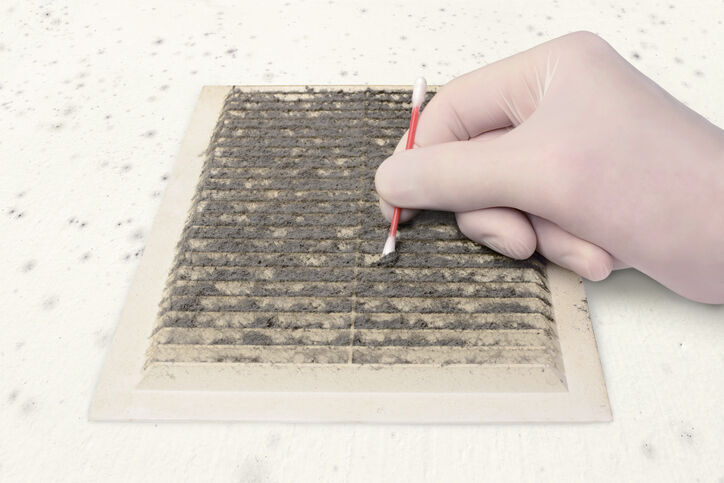
One of the first steps to checking on mold levels in buildings is a bit unexpected, according to air quality expert Michael Rubino. Rather than looking for evidence of mold or bacteria growth, as is traditionally done, Rubino says homeowners should be looking at dust.
“Mold — when it’s growing in our homes, offices, workplaces and school — is constantly sporulating as its means of reproducing,” Rubino says. “With that, it can also produce toxins. When you analyze the dust, which is exactly where these spores and toxins will end up settling, it can kind of tell you if there’s abnormalities for 36 different species of mold.”
Testing for those 36 species can help inform people about the mold that is potentially growing in their homes, which could help them treat it more effectively.
Testing all areas of a home or other building for mold and bacteria is crucial. This includes locations that are less frequently visited, like attics and crawlspaces.
“A crawlspace is kind of the worst, because it’s a space we typically never go down to, we never really look at it,” Rubino says. “It’s a dark, damp area that typically can grow mold pretty quickly.”
Many homeowners don’t think to test these infrequently visited areas, but Rubino emphasizes they’re just as important because the mold and bacteria there can move to other parts of the home.
“Every house has tiny cracks and crevices, and mold is 25 to 50 times smaller than what the eye can see, so it can easily pass through these cracks and crevices,” he explains. “As air naturally rises, a lot of these particles will rise with it, so that will significantly impact our air quality on the living levels as well.”
Rubino says it’s important to stay aware of every leak in a home or building, as well as maintaining a humidity level that hovers between 40% and 50%, as mold can begin to grow at a humidity level of 60%. He also cautions that HVAC systems can help propagate mold.
“One of the major components of the HVAC machine that tends to give air quality trouble is what’s called the evaporator coil,” Rubino says.
This piece of equipment constantly condensates by sucking moisture out of the air and turning it into water, he explains.
“But water being a life-source for things like mold and bacteria, that can introduce a problem with mold and bacteria growing on the evaporator coil and producing more particles, worsening air quality over time.”
Once mold infiltrates a porous surface such as drywall or wood, painting over it or bleaching it isn’t enough to get rid of the problem, Rubino says. He recommends investing in approaches that attack mold at its “roots,” or hyphae.
An obvious side effect of living with mold is it can make your home unseemly, but it can also have disastrous health impacts. Mucormycosis is a serious fungal infection caused by mold. While mucormycosis is not a widespread threat in the United States, Rubino says it is a constant problem in other parts of the world, including India.
“A lot of people were dying in India from mucormycosis, which is basically toxic poisoning from the abundance of mold in those homes,” Rubino says. “We get contacted from people all over the world looking for help and answers on how to fix their homes and their workplaces. The number seems to be growing every single year.”
Rubino believes mold is a global health crisis, and one that will probably get worse before it begins to improve. He attributes some of the occurrence of mold and bacteria in homes to the way in which homes and buildings are constructed nowadays.
“We’re looking at this net-zero, energy efficiency [manner of construction], but when we build these tighter homes that don’t breathe and that don’t have proper air exchange, then we have less volume of air,” he says. “Each breath that we take could potentially become more toxic, especially if there are issues in these homes, workplaces and buildings.”