Do you have dry eye? Signs and treatments
For a while, Suzanne Locke thought she could find a simple solution for her dry, itchy eyes. Maybe it’s just allergies, she’d think. Or maybe she stared too long at her computer.
And as her eye troubles got worse, the 46-year-old Chicago woman started using over-the-counter eye drops, using more and more all the time. Locke kept the little bottles everywhere—at home, at work, in her purse—just in case she needed them.
After a few years, the eye discomfort got so obnoxious she avoided face-to-face contact with co-workers.
“You just don’t feel as confident,” Locke says. “You don’t want to give a presentation because you’re blinking constantly, trying to get the stickiness out.”
Locke sought help from ophthalmologist Dr. Mitchell Jackson, who said her problems weren’t from allergies or eyestrain. He diagnosed Locke with dry eye, a chronic condition particularly common in women.
Enter the desert
Dry eye most frequently aggravates middle-age and older people, according to the National Institutes of Health. About 5 million Americans age 50 and older suffer from dry eye, and more than 3 million sufferers are women.
Most women experience the condition when their tears don’t properly moisturize their eyes. The tear film has three basic layers: oil, water and mucus, which all work together to make good tears. Problems with any of these layers can cause discomfort, according to the Mayo Clinic.
Jackson, who has a private practice in Lake Villa, Ill., says taking certain medications—blood pressure medicines, antidepressants and allergy drugs with antihistamines—also can dry up tear production.
“There are three classes of medications that cause dry eye, and the largest is antihistamines,” he says. “Anytime a patient goes on antihistamines—whether it’s oral, nasal or topical—they aggravate the risk.”
Careful correction
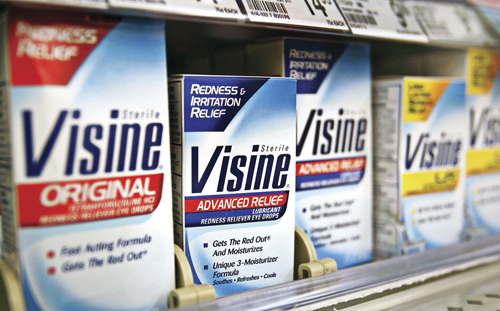
Over-the-counter eye drops are the first line of defense for most dry eye sufferers, but Jackson says that plan often backfires. The wrong medicines may aggravate the eyes even more.
“A lot of people will come in the office and have tried two or three or more artificial tears, and none are working,” he says. “Part of the problem is they’ve used the wrong artificial tears.”
There’s no quick fix for dry eye, but it’s always safer to use drops prescribed by a doctor, Jackson says. The condition can require life-long treatment, and sometimes making other adjustments, such as using a humidifier during dry months of the year. Taking breaks from the computer can also help.
If you’re struggling with redness, stinging or itchiness, get help from an ophthalmologist. Don’t handle the problem on your own. The eyes are sensitive organs, and typically require a little more TLC than other body parts.
“If you’re having blurred vision, vision fluctuation, difficulty seeing at night, difficulty doing near-vision tasks, despite all lubricated drops, you should see an eye care professional,” Jackson says.