
Dental and eye care key to overall health
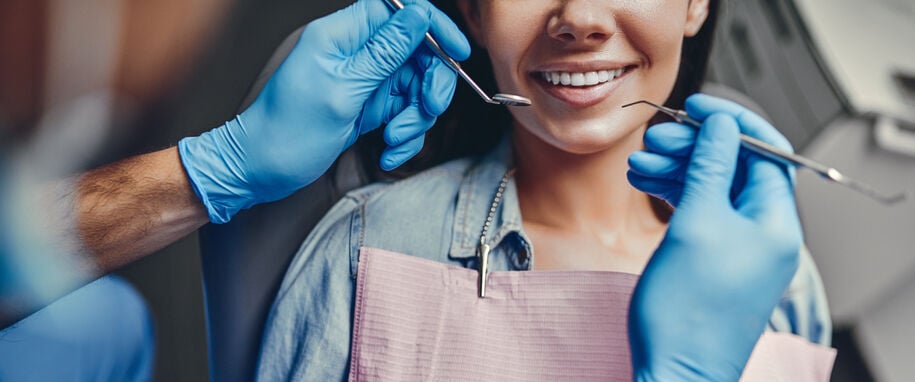
Gum disease rarely strikes fear into an individual like hearing the words “heart disease” or “chronic kidney disease.”
Regular dental exams - and eye exams - shouldn't be dismissed, though. Dental and vision health are connected to overall health, and regular visits are key to preventating larger issues that affect overall health.
For example, there is good reason why gum disease, also known as periodontitis, is a health condition that should not be taken lightly or ignored, according to dental hygienist Whitney DiFoggio.
“Many people are unaware that gum disease triggers your immune system to bring special cells from your body to help attack the bacterial infection in your gums,” said DiFoggio, who graduated from Prairie State College’s dental hygiene school in 2015. “That means your dental health is directly connected to your overall health. Gum disease can make you more prone to health issues such as heart disease, diabetes, chronic kidney disease and more.”
DiFoggio stressed it is of “utmost importance” to visit your dental office regularly for routine exams and cleanings to reduce your chances of gum disease and overall disease. She recommended brushing at least twice a day and flossing daily to reducing the amount of plaque bacteria from building up on your teeth and gums and thus limiting one’s chances of gum disease.
California-based dentist Michelle Kelman echoed DiFoggio and explained when one takes care of their mouth, they are taking care of the rest of their body as well.
“Dentists take many of the same classes in dental school as their medical student colleagues and continue to take classes in medical over the years to stay up to date in current trends in medicine in order to properly treat their patients,” Kelman said. “Some examples of this are evaluating common airway and sleep concerns, cancer screenings, heartburn concerns and blood pressure concerns.”
Kelman said an individual should visit the dentist for a professional cleaning at least twice a year, as this will help to remove bacteria that can potentially affect the heart.
Charles Reinertsen, a dentist of 40 years, went a step further by referring to the mouth as “the front door to the body.”
“Your mouth is full of bacteria both good and bad, and without proper oral care, the bad bacteria can get into the bloodstream and travel to other parts of the body including the heart and brain,” he said. “Spending seven-to-10 minutes a day cleaning the teeth and gums is the best way to prevent gum disease and infections.”
L. Bilal Beckles, whose practice is in Harlem, New York, pointed out there are several misunderstood aspects to dental care. One of the common misconceptions is that flossing will make one’s gums bleed. Beckles said bleeding gums after flossing is typically a sign the gums are inflamed because of bacterial infection. Another reason one’s gums bleed is often because the person is putting too much pressure when flossing.
Yazdani Family Dentistry CEO and Director Shahrooz Yazdani said another misconception is that dental appointments are solely to determine whether a patient has cavities.
“Regular dentist appointments are much more than that,” Yazdani said. “A dentist can spot early signs of gum disease and other oral health issues before they become serious problems, and by checking in twice a year, you will be able to catch these things as early as possible. Regular checkups are also important for detecting medication problems as some drugs may cause dry mouth or increase your risk of tooth decay. Checking in with your dentist can help you be informed on potential side effects.”
Beckles chimed in to remind everyone there is no need to ever fear the dentist or dental care. Perhaps the biggest misunderstood aspect to dental care is fearing the dentist.
“There is an assumption the dentist inflicts pain, but most of the time, the patient is already experiencing pain,” said Beckles, who has been in the industry for more than 15 years. “Dentists [actually] like to minimize pain by numbing when possible sensitive tissue to make the patient most comfortable.”
Keeping tabs on your eyes is also a crucial part to overall health. Southern California-based ophthalmologist Barrett Eubanks said those who are young, healthy and have no vision issues can go years without visiting the eye doctor, but for those who wear glasses or contact lenses, regular visits are necessary.
“If you wear contact lenses, it is important to visit an eye doctor yearly in order to make sure the contact lenses aren’t causing any additional issues with the eyes,” Eubanks said. “It is also important to visit the eye doctor if you develop any pain or injuries, blurred vision or flashing lights and floaters. The situation changes when one gets older and beyond the age 40. It is important to visit an eye doctor more regularly to screen for conditions such as glaucoma, cataracts and macular degeneration.”
Eubanks said when an individual turns 60, they should visit the eye doctor at least once every two years to screen for preventable eye conditions and maintain the health of their eyes and vision. He added that an eye doctor can detect diabetes, which, if left untreated, can result in cataracts, swelling and detachment of the retina and permanent vision loss.
Sony Sherpa, a physician running a holistic health clinic in Sacramento, said one’s eye health “is also a good indicator of overall health.”
“There are simple things you can do to improve eye health,” he said. “Wearing protective sunglasses when going outside, getting sufficient sleep and taking breaks when in front of the screen can all help.
“Bad eyesight isn’t only a nuisance, it can pose serious risks to your health and safety.”